They work best as a starting point, not a final price. Anyone booking solely from an instant quote should expect the figure to change after a proper site visit.
What do online tree removal quotes actually measure?
When people search “tree removal near me”, most online quotes estimate cost using a few basic variables: tree height bands, trunk diameter ranges, and whether stump removal is required. Some also factor in postcode data to approximate local labour rates. For a better understanding of how professional tree removal services assess pricing and job requirements, visit https://treesdownunder.com.au/tree-removal/.
What they usually do not measure is complexity. Access restrictions, decay, proximity to property, and the need for specialist rigging can change the job more than the tree’s height ever will.
Why do two “tree removal near me” quotes differ so much?
Quotes vary because each platform and contractor prices risk differently. One may assume clear access and a straightforward fell, while another assumes sectional dismantling with lowering ropes and extra crew.
The second reason is scope. One quote may include waste removal, permits, traffic management, and stump grinding, while another may price removal only and leave everything else as add-ons.
What information do online quote forms typically miss?
Most forms cannot capture what matters most: how the team will physically reach the tree and safely remove it. Narrow side access, conservatories, fences, sheds, and overhead lines can force slower methods.
They also miss tree condition. A dead, split, or storm-damaged tree often needs extra precautions. That can mean more time, more equipment, and sometimes a different insurance profile.
How accurate are instant quotes compared with on-site assessments?
Instant quotes are often accurate only within a wide range. For simple jobs, they may land close, especially if the tree is small, access is open, and there are no hazards.
For larger or more complex removals, the final price commonly shifts after inspection. A site visit lets the arborist confirm method, crew size, equipment, and disposal needs, which is what the price really depends on.
Which factors change the final price the most?
Access and risk typically drive the biggest changes. If a tree must be dismantled in pieces above a roof or near a road, labour time rises quickly.
Waste handling is another major cost. Chipping, hauling, and disposal fees vary by region and volume. Stump grinding, root flare size, and replanting requests also alter the total more than many people expect.
Do online quotes include council rules, conservation areas, or TPOs?
Often, they do not. If a tree is in a conservation area or covered by a Tree Preservation Order (TPO), additional steps may be required before work starts.
Even when permission is not needed, documentation and checks take time. If an instant quote ignores this, the final figure may increase, or the job may be delayed until compliance is confirmed. You may like to visit https://www.lanecove.nsw.gov.au/Environment-Sustainability/Tree-Management/Tree-Preservation-Order to learn more about tree preservation order.
Are online quotes reliable for emergency or storm-damaged trees?
They are usually less reliable for emergency callouts. Storm damage is unpredictable, and the safest removal method can only be confirmed by seeing the tree, the tension in limbs, and what it is resting on.
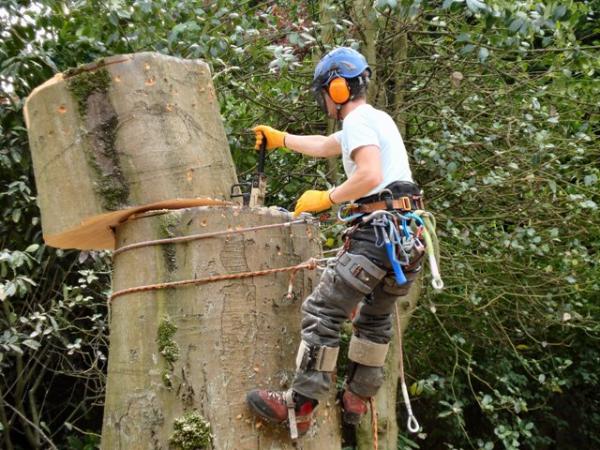
Emergency pricing may also include out-of-hours rates, rapid response scheduling, and extra safety measures. Online tools rarely price those details correctly.
Can they trust “from £X” pricing on directories and lead sites?
“From” pricing is typically marketing, not a promise. It is often the cheapest scenario: small tree, easy access, no stump, no waste complications, and standard working hours.
If the listing does not clearly state what is included, they should assume it is a minimum. The real job price is usually determined by scope, method, and disposal, not the headline figure.
What should they do to get a more accurate quote online?
They should provide more evidence than a form normally requests. Clear photos help: the full tree, the base, nearby obstacles, access routes, and what is beneath the canopy.
They should also share specifics in writing: whether waste must be removed, whether vehicles can park close, gate width, and any known constraints like overhead cables. The more detail given upfront, the fewer surprises later.
What questions should they ask before accepting any quote?
They should ask what the quote includes, especially waste removal, stump grinding, and making good. They should also confirm whether the method is a straight fell or sectional dismantle, and whether additional charges apply if the method changes.
They should ask for proof of insurance, qualifications, and whether the contractor follows recognised safety standards. A cheap quote that skips safety or proper disposal can become expensive in other ways.
What is the simplest way to use online quotes without getting caught out?
They should treat online quotes as a range and shortlist tool, then confirm with a site visit for any non-trivial removal. If they need a firm budget, they should request a written, itemised quote after inspection. For guidance on council approval requirements for tree removal in Sydney NSW, it helps to check local rules before committing to the work.
Online estimates are still valuable, as long as expectations are realistic. The most accurate pricing happens when the contractor can see the tree, the access, and the risks, then price the job they will actually perform.
FAQs (Frequently Asked Questions)
How accurate are online tree removal quotes compared to on-site assessments?
Online tree removal quotes often provide a broad estimate based on limited information and averages. They may be reasonably accurate for simple jobs with small trees and easy access, but for larger or complex removals, prices usually change after an arborist conducts a site visit to assess access, risks, and equipment needs.
Why do ‘tree removal near me’ quotes vary so much between providers?
Quotes differ because each contractor assesses risk and scope differently. Some assume straightforward felling with clear access, while others factor in sectional dismantling, extra crew, waste removal, permits, or stump grinding. Variations in what services are included lead to significant price differences.
What important details do online tree removal quote forms often miss?
Most online forms cannot capture critical factors such as physical access challenges (narrow side access, fences, overhead lines) and the tree’s condition (dead or storm-damaged). These aspects affect safety measures, time required, equipment used, and ultimately the final cost.
Do online tree removal quotes include council regulations like Tree Preservation Orders or conservation area rules?
Often they do not. If a tree is protected by council rules or is in a conservation area, additional permissions and documentation may be required before work can start. Ignoring these can cause delays or increased costs not reflected in instant online quotes.
Can I rely on ‘from £X’ pricing on directories and lead sites for tree removal?
‘From £X’ pricing is typically a marketing figure representing the cheapest possible scenario—small tree, easy access, no stump or waste complications. Without clear details of what’s included, this should be treated as a minimum starting point rather than a guaranteed final price.
What steps can I take to get a more accurate online tree removal quote?
Providing detailed information upfront helps improve quote accuracy. Share clear photos showing the full tree, base, obstacles, access routes, and surroundings. Also specify if waste needs removing, parking availability for vehicles, gate widths, and any known constraints like overhead cables. The more detail given early on reduces surprises later.