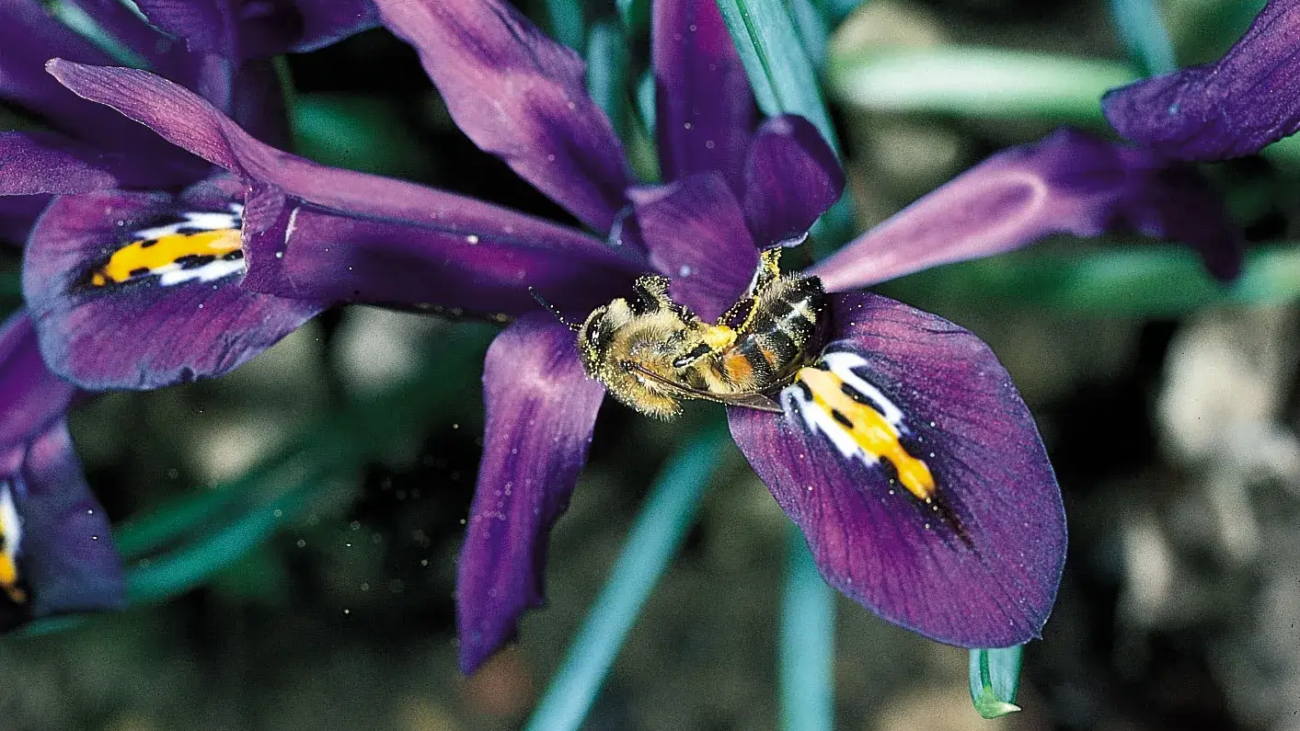
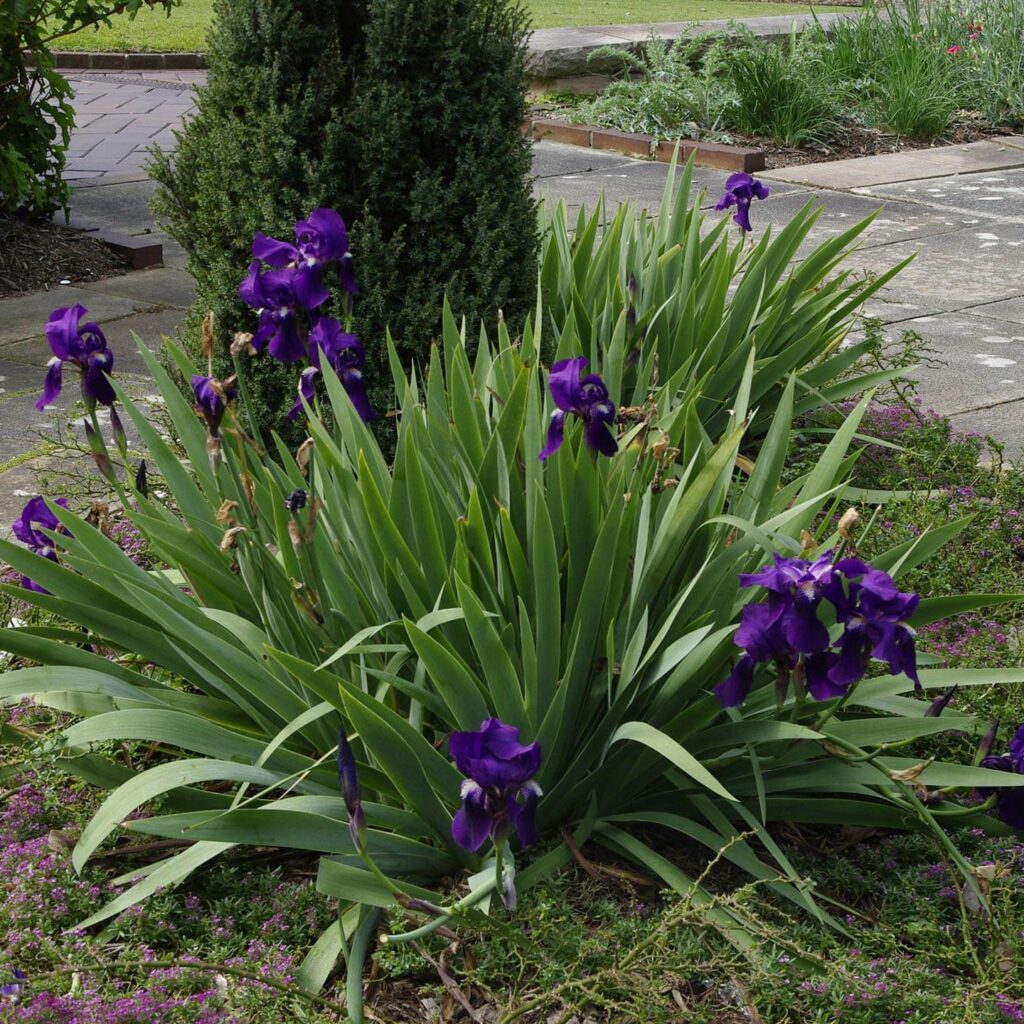
iris reticulata dark blue specie

Miniature Dwarf Irises

Table of Contents

The Miniature dwarf bearded irises are the first bearded irises to bloom in the spring. They are great for rock gardens, banks or raised beds. Plant them where you can enjoy them in early spring. They grow up to 8 inches tall.

MDB Miniature dwarf   The first bearded irises to bloom in the spring, up to 8 inches tall (20 cm), great for rock gardens.

MDB RE

MDB irises that have been reported to rebloom in designated zones 

MDB His

MDB irises that were introduced over 30 years ago .

MDB Ampersand (Don Spoon 2008) 6″ light peach orange standards; dark plum falls edged peach; orange beards; ruffled.

MDB Black Olive (Paul Black 2013) 7 1/2″ L & Re zone 8 bronze to dark purple standards; red black falls; greyed gold beards tipped white on end.

MDB Buttermint (Jean Morris 2019) 6″ tall (15 cm); S. light yellow with orange veining at base; style arms and F. light yellow; beards orange in throat and middle, ends yellow; slightly ruffled; slight sweet fragrance. (Wee Me X Fox).

MDB DITTO (Hager 1982) 7″ E-L&RE z-3-9white standards; falls dark red maroon edged white; blue flash at end of white beards.

MDB RE HILDA’S GIFT D. Spoon 2002 X Re z-6; 6″ EM rich yellow bitone; golden yellow beards; wide and ruffled (Orange Tiger X Baby Prince).

Miniature Dwarf Irises

MDB Howesie J. Burton 2005 6″ EM dark red-lavender self, white lines at blue beards.

MDB Icon Keppel 2008 8″ ML golden orange standards and styles; wine falls with golden orange band; mandarin red beards.

MDB India Ink (D. Spoon 2010) 7″ EM non fading reddish-black self with yellow orange beards. Velvety sheen.

MDB Kayla’s Song D. Spoon 2009 7″ E lavender blue with plum violet spot and darker veins; lavender blue beards tipped orange; Caparne Welch Medal.

MDB Lotta Dotta D. Spoon 2011 7″, 1-2 buds. M. S.white edged violet with promounced stitching. F. violet edges and stitching; beards white.

MDB Miniac (Jean Morris 2015) 6″ ML light peachy pink with darker peach veining around orange beards.

MDB SA Punk Ransom 1997 7″ ML cobalt violet with darker fall spot; violet beards ending in short horns.

MDB His Pussycat Schmeizer 19677″ E pale green with deep green lines from white beards (Green Spot X unknown).

MDB Rosa Brooks J. Burton 2011 4-5″ E. yellow with darker yellow crests. white dart at end of white beards.

MDB RE ROYAL MAROON D. Spoon 2001 X Re z-6; 8″ EM and Re lightly ruffled, fully flared maroon self;  (Pele X Baby Prince.

MDB RE SAPPHIRE JUBILEE G. Spoon 2013 XRe z-6 8″ EM & Re light lavender blue with medium lavender blue spot on F.; beards lavender blue tipped orange.

Miniature Dwarf Irises

MDB Saucy Sprite A&D Willott 1997 6″ EM creamy white yellow shoulders; white beards.

MDB Shy D. Spoon 2012 REC 7″ EM ceamy white standards; creamy white with violet blue spot; white beards tipped orange(2 RE parents).

MDB Spring Beacon D. Spoon 2005 7″ VE ruffled plum and raspberry self with showy lavender-blue beards (I. pumila Atroviolacea X Lighthouse Beacon).

MDB Star Caper (A&D Willott  1981) 5″ E yellow with darker spot; white beards.

MDB RE STORM COMPASS Chancellor/Rust 2014 X Re z-6 5″ VE & Re purple with darker spot on falls; blue beards; reliable rebloom zone 6.

MDB RE TRIMMED VELVET D. Spoon 2006 X Re z-6; 6″ EM&Re ruffled deep plum-purple with purple black spot in F; 2-3 buds; reliable rebloom; Caparne Welch Medal 2013; vigorous.

MDB White Ice (Don Spoon 2015) 5″ ML translucent pure white self; fertile both ways; Cerise Boy X Red Rabbit.

MDB Zheng Elf (Anita Moran, 2020) Seedling #06NRrr01. MDB, 6″ (15 cm). Midseason bloom. Standards lemon-yellow, occasional splashes of red; style arms lemon-yellow; falls canary-yellow, lighter lemon-yellow rim, red splashes; beards canary-yellow; broken color. ‘Nut Ruffles’ X ‘Red Rabbit’.

Other resources:
Iris Reproduction
How to Choose the Best Flower Delivery Service in Crows Nest
Finding the Best Florist in Cammeray for Fresh Flower Delivery

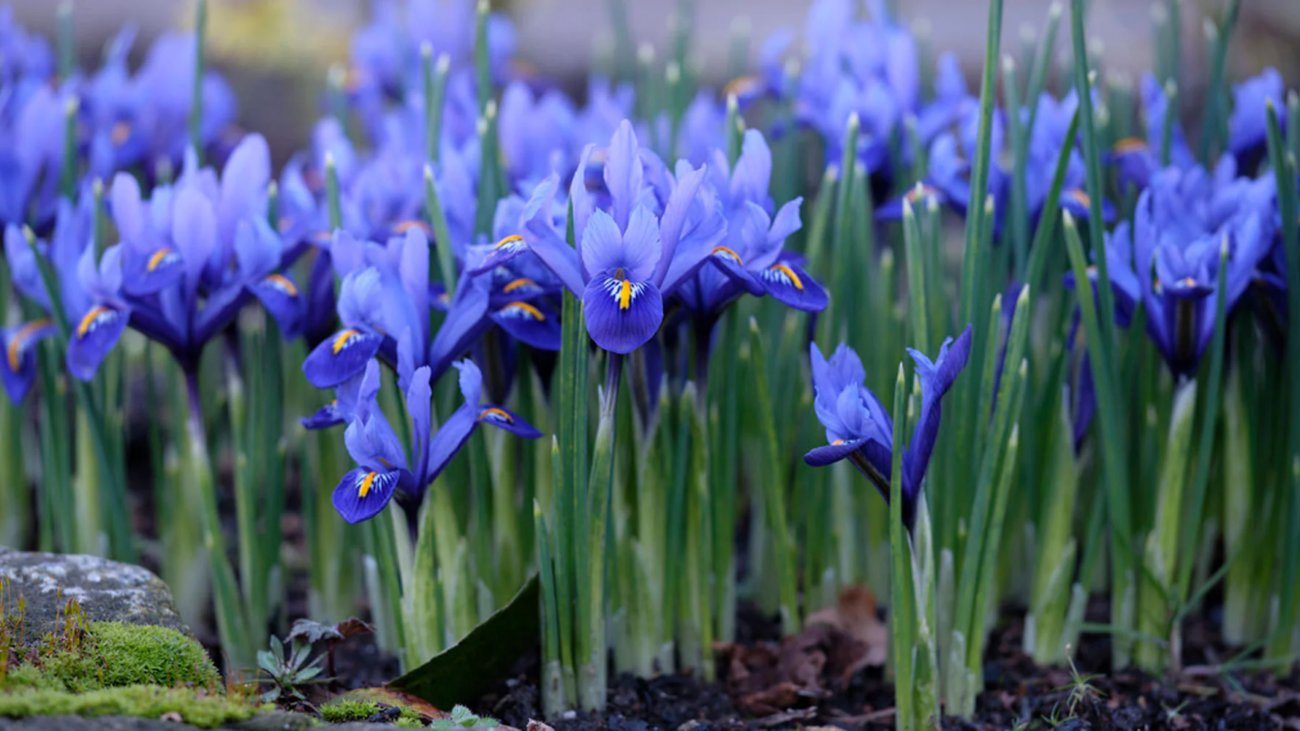
Hybridizing Bearded Irises

Hybridizing Bearded Irises

Table of Contents

Iris Crossing

Parts of this article were prepared for training AIS garden judges on the basics of hybridizing bearded irises – the pogons – that can have exotic fragrances and a complete rainbow of colors to attract pollinators. Bearded irises are placed in classifications based on stalk heights and time of blooming: MDB-miniature dwarf bearded (under 8″) earliest, SDB-standard dwarf (8″ to 16″) early, IB-intermediate (16″ to 27.5″) middle, BB-border (16″ to 27.5″) late, MTB-miniature tall (16″ to 27.5″) late, and TB-tall (over 27.5″) late. In this article, a cultivar without class designation is a TB.

As president of the C & P Iris Society of Region 4, I am directing this summary article to our seven new iris hybridizers, youths 13, 14, 16 and 18 years old, plus three over 19. We have two spring hybridizing clinics where youths may each make five crosses. We provide a hybridizing kit for each youth. I follow their successful seedpods and prepare their seeds; they then plant in their own gardens. Watching with their parents, these youths with their friends gleefully crossing irises in our garden is pure joy. They are the future great hybridizers of the American Iris Society.

Hybridizing irises, like life, may be like a box of chocolates. We do not know what we will get. But learning to be a chef who knows the recipes of the confections may remove some of the mystery. Yet, hybridizing bearded irises will always be more mystery than science. Your hybridizing tweezers, like a magic wand, can create wonderful beauty.

Easy Genetics

This article has been expanded to be clearer and more complete than the 7-page handout in large font, used in the garden judges training. One participant, after looking over the handout, asked me if it was written in English. Many believe that Genetics is Greek to them, it goes over their heads and is beyond their comprehension. Actually, the basics are like the simplest forms of math, like 1+2=3, 2+2=4, and half of 4 is 2. To master Genetics and all its advanced textbooks, for its many applications, would take a lifetime. There are thousands of published journal papers just on the Genetics of the genus Arabidopsis, the wild mustard. To be a successful iris hybridizer, just take the time to learn the basic Genetics presented in this relatively short article. Remember the words of Thomas Jefferson, “Luck favors the prepared mind.” Increasing your basic knowledge of Genetics can increase your chances for hybridizing success.

Hybridizing Bearded Irises

Easy Lexicon

Scientific terminology comes mostly from Greek and Latin. The genus name Iris is from the Greek name for their rainbow goddess. The scientific word for bearded irises is pogon from the Greek word for beard. Whereas “bearded” can be replaced by a different native word in the 7,000+ spoken languages of our 7,000,000,000 humans, the scientific term POGON is always spelled, pronounced, and used to mean the same thing in any language. Pogon separates the bearded irises from the beardless that are called apogon or without beards.

This article uses about 50 scientific words, while avoiding as many as possible. Most educated people know over 50,000 words in their own native tongue. It seems a small task to add to your repertoire of words 50 scientific terms that can be written and pronounced, and have the same meaning in every languages on earth. I was often told, “Use of a dictionary (lexicon) will not cause irreparable brain damage.” Learning to use correctly 50 scientific terms could allow you to grasp the basic genetic concepts needed to successfully hybridize irises.

Glorious Rebloom

We held our judges training in the third week of October, during our Region 4 fall meeting, to showcase many reliable rebloomers in full bloom. Many of these began reblooming in early September; and some like MDB ‘Trimmed Velvet’, SDBs ‘Purple Joy’ and ‘Ray Jones’, and TB ‘Corn Dance’ are so cold hardy, they may continue reblooming until Thanksgiving in our zone 6b. As we continue to intercross the best fall rebloomers, they will produce seedlings that rebloom earlier, even in July and August, with more flower stalks, and with better cold hardiness to withstand fall and spring frosts and freezes.

We envision in the near future when these new rebloomers will compete with chrysanthemums for their vibrant fall colors, growing and reblooming in large, deep pots, then planted in a garden to enjoy in spring and fall. Ginny had a dream about driving around Winchester and being awed by the reblooming irises that blanketed the neighborhoods. My dream is that many youths and youthful minded iris growers will decide to become iris hybridizers so Ginny’s dream can come true.

Live Long and Prosper

For many hybridizers, their incentive for growing, blooming, and hybridizing irises, is to sell their introductions to support their hobby, themselves, or even their family. A hybridizer who masters the procedures and concepts summarized in this article could be seeing their first seedlings bloom in two years and begin selling their first introductions in four to five years. Eventually, they could clear over $10,000 per acre if they use their land as well as their advertising and purchasing funds wisely. You could support a family of four on a five-acre farm with good topsoil.

Their Plot

May I suggest to parents that they offer to their youths a sunny garden plot solely for them to tend of up to 40 by 40 feet. There they can grow their collection of iris cultivars for breeding stock and learn how to hybridize bearded irises as an avocation or possibly a vocation. They will get lots of sun and exercise and eventually earn spending money, and maybe even enough to buy their first vehicle. Each iris cultivar is a living plant with tens of thousands of genes and the ability to produce gloriously beautiful flowers. Bearded irises are the regal queens of any garden scene and are cherished by gardeners as a choice perennial. They are among the easiest perennials to grow, especially the reblooming cultivars.

Top Start from Oz

Repeating the crosses in both directions of top award winners is a good way to start. The brilliant cross that produced for Australian Barry Blyth the zone 9 rebloomer and Wister Medal winning ‘Decadence’, was (Temple of Time X Louisa’s Song). Barry has championed making crosses in both directions, pod X pollen and pollen X pod parents, as the results can be quite different. The potential diversity of seedlings in such a cross is over a quadrillion (at least 24 X 24, 24 times or 24 factorial), and repeating the crosses of other hybridizers should be encouraged. You may also want to add a few self crosses of your tallest and most vigorous cultivars or seedlings. Crossing your best cultivars or seedlings on either parent or its sibling can produce some unique offspring, some superior to either parent. Always save your second best sibling from a cross that produced an exceptional seedling for sibling crosses. Some successful hybridizers believe in limiting their inbreeding at first cousin crosses, yet the results obtained with closer inbreeding in tetraploids such as self, sibling, and parent crosses speak for themselves. Such aversion to closer inbreeding might delay successful progress. For example, I crossed my Wister Medal winning ‘Uncle Charlie’ on a sibling of ‘Lady of Leoness’ from the reverse cross of(Honky Tonk Blues X Silverado) that produced ‘Uncle Charlie’. From this reverse sibling cross, I obtained my ‘Orchid Dove’ that got the most votes for TBs at the Wisconsin AIS National Convention. ‘Orchid Dove’ has several recessive traits not found in either parent or grandparent. I converted their two doses to four doses for hidden recessive traits and expressed lace, orchid pink coloration as seen in the Dykes Medal winner ‘Mary Francis’, dove blue pigment, etc. ‘Orchid Dove’ is a vigorous grower with good increase and is an excellent parent. The master judge Perry Dyer said, “It is gorgeous!” Once an introduction leaves your garden, any praise or awards it receives must be earned on its own merits. AIS garden judges know that their greatest responsibility is to vote for the cultivar and not its hybridizer.

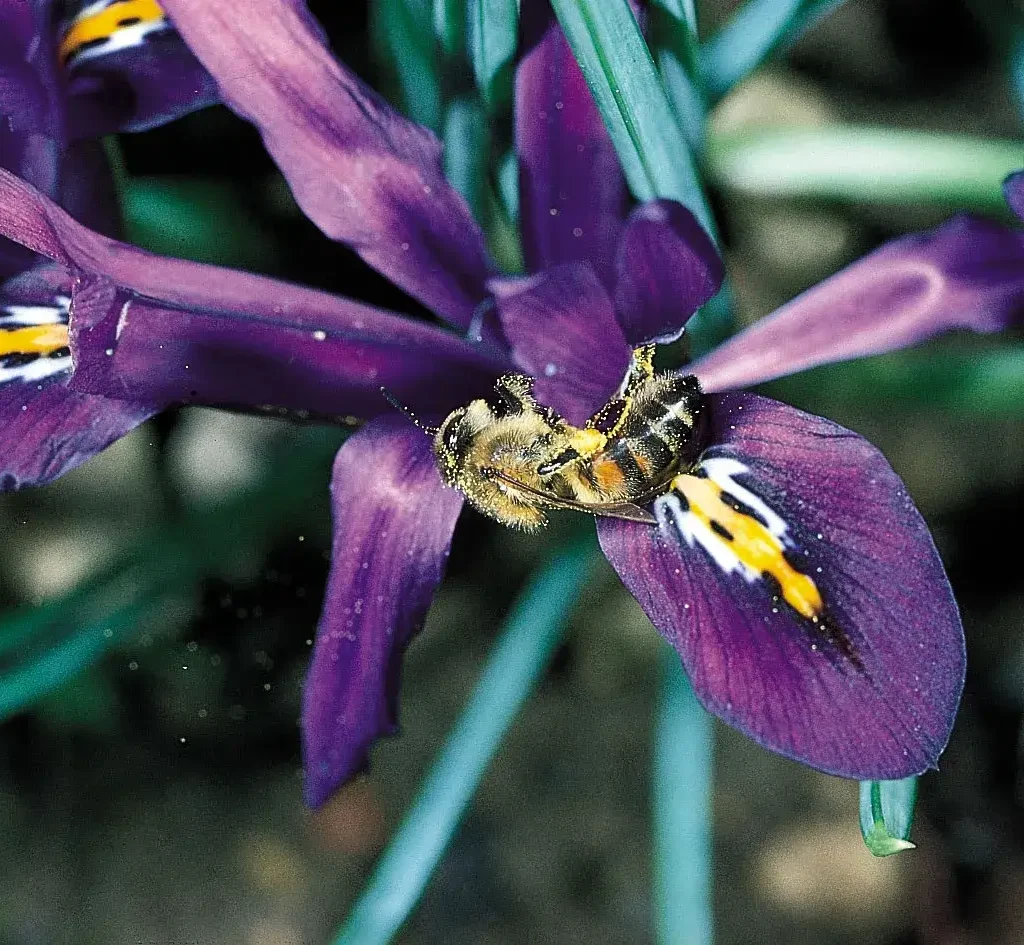
Selfed by Crawling Insects

Random outcrossing seldom produces superior seedlings. In modern bearded irises there are few pods, except in a few dwarfs and MTBs, that are randomly crossed by flying insects like bees and bumblebees, as the stigmatic lips are too highly positioned. This is why you do not have to remove the falls after making a cross as required with beardless irises. Those who have had success planting seeds from bee crosses such as Dick Sparling, most likely planted seeds from a selfing by crawling insects. Failure to remove all three stamens greatly increases the chances for such selfing. Most hybridizers throw away all pods they did not cross. We plant the seeds from such pods on the best cultivars assuming they are self crosses, and have obtained some of our most unique seedlings with good vigor from these mystery pods. We make about 50 self crosses each year that set few pods, yet they can express novel recessive traits and even uncover a new, hidden mutation. Selfing the same flower rarely works. To make a successful self, use mature pollen from an older flower on a newly opened flower.

Look-a-likes

In outcrossing, using look-a-likes is usually more successful than unlikes, in which few seedlings will surpass either parent. (Likes X Likes) is especially important when the traits you are pursuing are recessives, like tangerine beards or the plicata pattern. Once you learn how to hybridize, you will often cross unlikes, as a pink on a plicata. For example, cultivars carrying two recessive, unexpressed doses of plicata like the vigorous, modern flowered bicolor ‘Little John’, with pink standards and lavender falls, are useful when crossed on plicatas or variegated flower pod parents. ‘Little John’ came from a cross of a pink times a reliable plicata rebloomer that gave it two doses of recessive plicata and zone 9 rebloom. Richard Ernst got his Wister Medal winning ‘Ring Around Rosie’ with purple sanded fall pattern with yellow rim with a triple sibling cross {(sib x sib) Sibling X (sib x sib)} of the pink ‘Edna’s Wish’ on the complex plicata ‘Wild Jasmine’. Ernst produced a series ofbeautiful cultivars such as ‘Carnival Ride’ and ‘Looky Loo’ using sibling crosses. George Shoop was probably the greatest master of inbreeding, often using sibling crosses. Study the crosses with dwarfs by the late Bennett Jones in his small garden plot and learn his successful methods. There are many knowledgeable hybridizers who will gladly answer your questions by e-mail, mail, or by phone when they are available, and even schedule you a visit to their garden at a time of day when they are not busy hybridizing.

Hybridizing Bearded Irises

Select and Collect

Another successful strategy is to collect and use cultivars that are known to be great parents like ‘I Do’, ‘Vanity’, ‘Titan’s Glory’, ‘Suspicion’, ‘Queen’s Circle’, ‘Romantic Evening’, ‘Fancy Woman’, and ‘My Ginny’. Select for your collection known rebloom carriers like ‘Spinning Wheel’, ‘Yaquina Blue’ and ‘Starring’ that are good parents. Obtain some of the best reliable rebloomers including those that bloom early in the fall as well as late summer. Select those with cold hardy stalks that can withstand early fall and late spring frosts. Other growers may allow you to gather pollen in their gardens or give you flower stalks they entered in shows. Buying or trading for the less expensive, best older cultivars will stretch your funds and still yield good seedlings.

There are many ways to gain knowledge to invest wisely in the newest and best cultivars to use for your specific goals. You can attend local iris shows or regional and national conventions. You can read iris books, catalogs, and articles from the AIS Irises, section publications (The Reblooming Iris Recorder), and Tall Talk. You can search through web sites for commercial sources of irises and the AIS website (irises.org) where you can click on the Iris Encyclopedia <wiki.irises.org>. Iris cultivars over 30 years old are called historics, those newly introduced in the last ten years we call the moderns, and those in between we call classics. As the years progress, there are now many inexpensive classics that are nearly as good as the best moderns.

There are many colors and color patterns found only in the historics and classics that lack reliable rebloom and need improvements in form and vigor. Prices drop from $25-75 (SDBs to TBs) the year of introduction, to $5-15 in five years and $3-5 in ten years. Unlike daylilies, hostas, peonies, etc. costing hundreds of dollars when introduced, only two introduced TB irises, space age ‘Unicorn’ in 1954, and super rebloomer ‘Immortality’ topped out at $100. Now, a few TBs are introduced at $75, but most are $35 – $60. Buying cultivars you have seen performing well in private and commercial gardens in your climate zone is a good practice. Assembling about 100 choice cultivars selected specifically as breeding stock is a good start. If you begin with a single goal where there is little competition, even 5 could be a good start. You have to invest in maintenance of each cultivar you add to your collection, so choose each one carefully. You should feel free to remove from your collection any that under perform in your zone. In your second year, you should have increase from your collection to sell. In a few years, you will have your own vigorous reselects for planned crosses to reach specific goals and begin your program of successful line breeding.

Lasting Signs

For our permanent metal signs we buy rust resistant metal markers from Eon Industries 107 W. Maple Street, P.O. Box 11, Liberty Center, OH 43532-0011 Phone (419) 533-4961, Fax 533-6015. These have thin stainless steel rectangular pieces for the label with two holes at each end and rounded edges that dont cut your arms while weeding. We buy their Nursery Markers with a u-shaped bent wire with two 15 long legs; about 7 goes into the soil. For a few labels, we use Brother P-touch (R) laminated label maker with one inch wide tape for two lines for cultivar name, hybridizer, year of introduction, classification and rebloom.

For larger projects we use Avery(R) 5520 weatherproof address labels from the Staples catalog center. With these Avery(R) labels you should use a laser printer that wont wash off. Ginny uses a database, either from Works or Excel. Then she selects the fields to print, and can make hundred of labels this way. These labels last 10 years or more without fading. Put the stainless steel rectangle with label affixed on the two wire legs with the label upside down and bend the top at a 45 degree angle, which turns the label right side up, then it wont slide down the wires from winter snows. These permanent metal signs each cost about $1 to make.

An inexpensive way to make signs to label reselects and seedbed crosses is to use 9 sections of 1 wide vinyl venetian blinds. Insert by the cut pointed end halfway into the soil. Repeat the information in the top and bottom half so if the top is broken off by an animal, you still have it labeled. A pencil will write on this vinyl surface and the graphite will stay indefinitely, unlike permanent markers whose ink is removed by sunlight in a year or less. Punch a hole in the bottom end of the vinyl strip. Then wrap on itself a thick rubber band through the hole that will prevent the sign from heaving in winter. Keep current your maps of all your garden plantings. Animals can remove signs. Making maps should be the first thing you do when you plant.

Other resources:
Finding the Best Florist in Cammeray for Fresh Flower Delivery
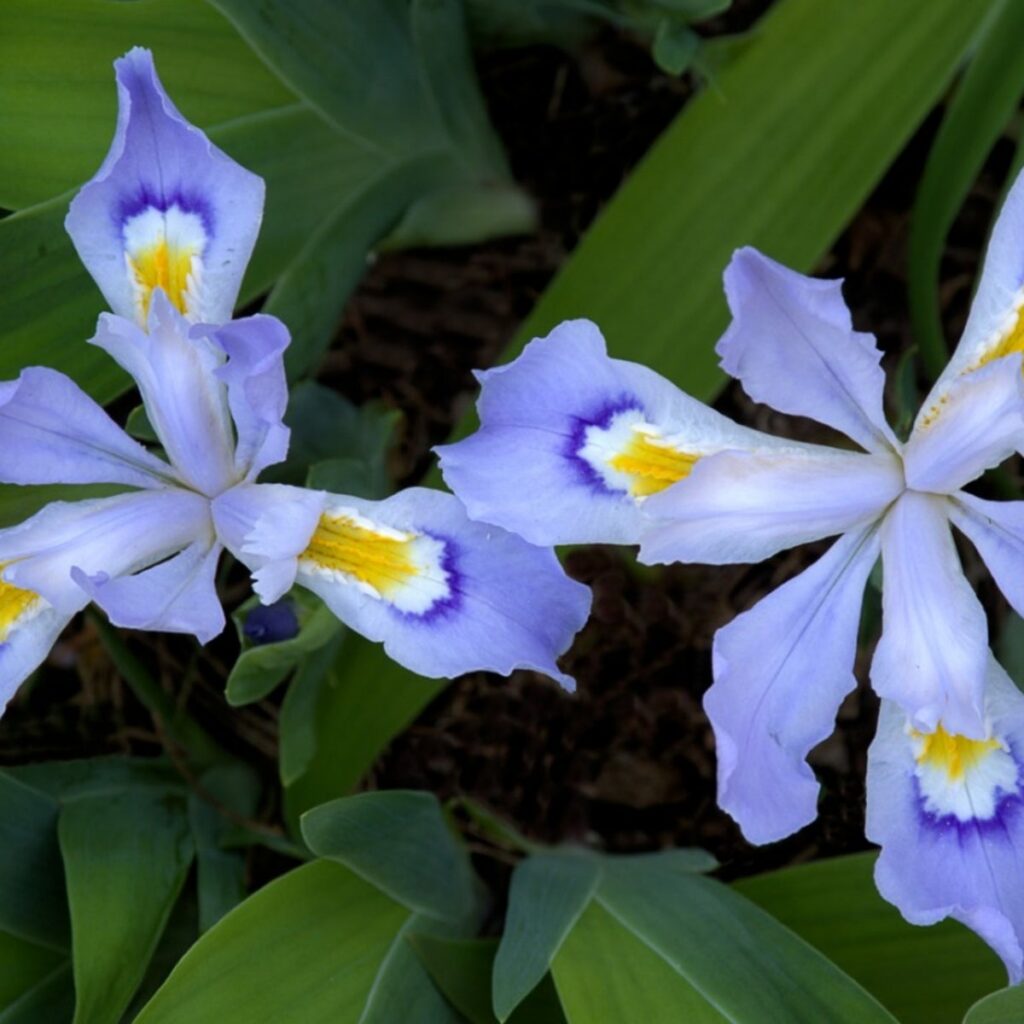
Iris Descriptions
How to Choose the Best Flower Delivery Service in Crows Nest

Iris Reproduction

Iris Reproduction

Recently, a question was presented to me, “Can one pollen grain fertilize all the ovules in an iris flower?”  I will attempt to answer this question and add what I hope will be some interesting facts about iris reproduction.  

Highly successful land plants, such as irises, have two different plant forms (sporophyte and gametophyte) that alternate in each generation between a diploid sporophyte organism designed to resist drying out and haploid organisms (pollen or microgametophytes and ovules containing macrogametophytes) that require a moist environment inside the sporophyte where fertilization takes place.  Each sporophyte microspore mother cell produces by meiosis (reduction and division, 2N to 1N sets of chromosomes, or in tetraploids 4N to 2N) four microspores that develop into four binucleate pollen grains with tough coats. Irises are seed plants (Angiosperms) with one embryonic seed leaf (Monocotyledons) and leaves with parallel venation.  Irises advance the basic lily plan and reduce the flower parts, which are basically modified leaves, from multiples of six to three.   

The female part of the iris flower is the pistil composed of  the stigma, the style, and the ovary. The male part is the stamen made of the attachment filament and the anther with four long, parallel pollen sacs. The pollen is not “ripe” until the pollen sacs open and the puffy masses of pollen are apparent.  If  the nourishing filament of the stamen is broken too early when the pollen sacs are immature, the pollen may be of no use. The stigma has a sticky secretion that not only holds the pollen grains, but also contains various nourishing chemicals, such as sugars, that causes the pollen grain organisms to germinate and build the pollen tubes that digest their way with enzymes as they descend down the style tissue to the ovary. The pollen grain is remarkably resistant to drying and has one tiny area where the germinating pollen grain organism will emerge. The ovary contains the ovules, each with two coverings (integuments) that surround the multicellular macrogametophytes in their little “moist pond.”

Iris Reproduction

The surrounding integuments that later develop into the two seed coats leave a tiny opening, the micropyle, for the pollen tube to enter.  A tall bearded iris can have at most, about one hundred ovules distributed in the three chambers of the ovary. This threefold redundancy may be useful, since a Verbena bud moth larva that may penetrate the developing pod usually does not go from one ovary chamber to the next and destroy all the seeds. The ovules are lined up in rows and held by stalks though which they receive nourishment as they develop into seeds (analogous to multiple fetuses in a mammalian womb). The central region of the ovary that the ovules stalks attach to is called the placenta.  If the iris pod is broken from the stalk too early, the small seeds may be underdeveloped and unable to germinate or grow.

When the pollen grains are applied onto the stigmatic lip of the iris flower by the insect or human pollinator, there can be thousands that will germinate and form pollen tubes.  From that moment the race is on, and when all ovules are reached, all Johnny-come-lately pollen tubes are essentially lost. There will be just one winning pollen grain’s pollen tube reaching each ovule, so there’s your answer.  One pollen grain pollinates one ovule, and only one.  The pollen will germinate in minutes on the stigmatic lip.  Each pollen grain will take about eight hours to grow a pollen tube down through the style arms to the ovary and finally growing to and into the ovule opening.  If the pollen is applied on only one of the three stigmatic lips, the pollen tubes will still go into all three chambers of the ovary and may fertilize all the ovules. Most hybridizers apply pollen to all three stigmatic lips. The fertilized ovary will swell and grow into a pod as the stalk gains strength and resiliency. In about two months the pod will dry, turn tan, and begin to crack at the end.  At this point, harvest the pod in a folded paper sandwich bag and place it in a cool place for a couple of weeks while the seeds harden, then they can be separated from the dried, brown pod walls. 

If the hybridizer is too rough while daubing pollen, the style arms may be broken, and the pollen tubes in the broken style arms can’t reach the ovary.  If there is rain, hail, strong winds, frost, or overly hot conditions, the pollination can fail.  You need to make the cross at least three hours before rain occurs, otherwise you can cover the flower with a plastic bag with the top corner cut out so it will not overheat inside the bag. Some hybridizers strip off all three falls and cover the cross with a section of nylon stocking so no interloping insect will enter with unwanted pollen. 

The preeminent moment of  iris reproduction occurs when the pollen tube enters the ovule.  But before entering, led by the pollen tube nucleus, the generative nucleus following behind divides by mitosis to produce two haploid nuclei.  The pollen tube, relative to its thickness, is an extremely long filament filled with cytoplasm, yet it contains no proplastids that will develop into chloroplasts, thus the chloroplasts and their DNA only come from the pod parent and the egg cell of the ovule microgametophyte.  Since the chloroplasts power the plant’s photosynthesis, it is easy to understand why it is always best to use as the pod parent the most vigorous parent.  If you want to obtain variegated foliage, you must have the trait in the pod parent as Allan Ensminger discovered.  The gene that produces the variegated foliage trait is most likely in the chloroplast DNA. 

Once the two sperm nuclei enter the iris ovule a most remarkable thing happens; there is not one, but two fertilizations.  One haploid sperm nucleus unites with the macrogametophyte cell that contains the haploid egg nucleus to produce the diploid sporophyte zygote. The other sperm nucleus produces the triploid endosperm by uniting with the diploid nucleus of the central cell formed from fusing two cells of the macrogametophyte.  The other five cells, of the total of eight that made up the macrogametophyte produced from three divisions of one megaspore, are transient and play minor accessory roles. Then, both zygote cell and the endosperm cell increase by cell division (mitosis) which eventually ceases as the seed coat dries and hardens, and the enclosed embryo with its attached endosperm becomes dormant. By analogy, the endosperm is to the iris embryo what an egg yolk sac is to the embryo of a fish, amphibian, reptile, bird, or egg-laying monotreme mammal like a Duckbilled Platypus. 

Iris Reproduction

In the iris seed coat are special plant hormones like abscissic acid that prevent the embryo from breaking dormancy.  These germination inhibitors have to slowly leach out in the wetting cycles of the soil so that only a percentage of the seeds germinate each year for several years. Iris seeds can remain dormant and viable in the soil up to 5 years and if stored cool and dry for thirty years or more. You can remove much of these germination inhibitors by soaking the seeds for about ten days with daily changes of water taking care to keep them cool as in a basement.  Then, if the seeds are planted you will have a much higher percentage (90 to 100%) to germinate the first year. 

You may elect to obtain the needed ninety days of stratification, cold temperature under 50 degrees F, in a refrigerator rather than in the garden. However, if your refrigerator shuts down and the seeds dry out or it gets too cold and freezes where you placed the seeds, you may lose them all. This is the hybridizer’s worst nightmare, the loss of a year’s hybridizing work, and it has occurred.  If they germinate early in the refrigerator and the roots get too long, you may lose some when they are planted.  I prefer to plant the seeds in soil in pots for later transplanting with the pots sitting on the ground in sand or mulch, or I plant them directly in the seedbed soil 4 inches apart and ½ inch deep by November 1.  The seedlings that germinate in the second or third year should be transferred to new beds, as they cannot compete with the large, first year seedlings.  We give each seed bed four years before digging it up, as we are looking for rebloom, winter hardiness, and disease resistance that take longer to evaluate.  As soon as possible after you have evaluated a seedling as worthy of saving, move it to a select bed with the seedlings at least 9 inches apart. Otherwise, it may not bloom the next year and even get misplaced.  Next the seedling is lined out in a reselect bed for final evaluation before consideration for introduction.  Then you will need another couple of years to build up stock, send it to regional, national and international competitions and get feedback from garden judges.  Thus, in a minimum of six years you may go from the cross to introduction and sale.          

The most important rule for planting iris seeds or transplanting seedlings is to plant them in the very best prepared bed you can, so they can reach their fullest potential. If you can easily insert a rod at least one foot deep into your seed bed then you have prepared an adequate root run. Of course, never walk on a seed bed or you will compact the soil and press out the essential air content.  Give them the best space, soil preparation, fertilizer, and care possible and they will reward your efforts. If they are planted in a poorly prepared bed, or overcrowded, they may never grow well, and you may never know how good they were.  

Other resources:
Finding the Best Florist in Cammeray for Fresh Flower Delivery
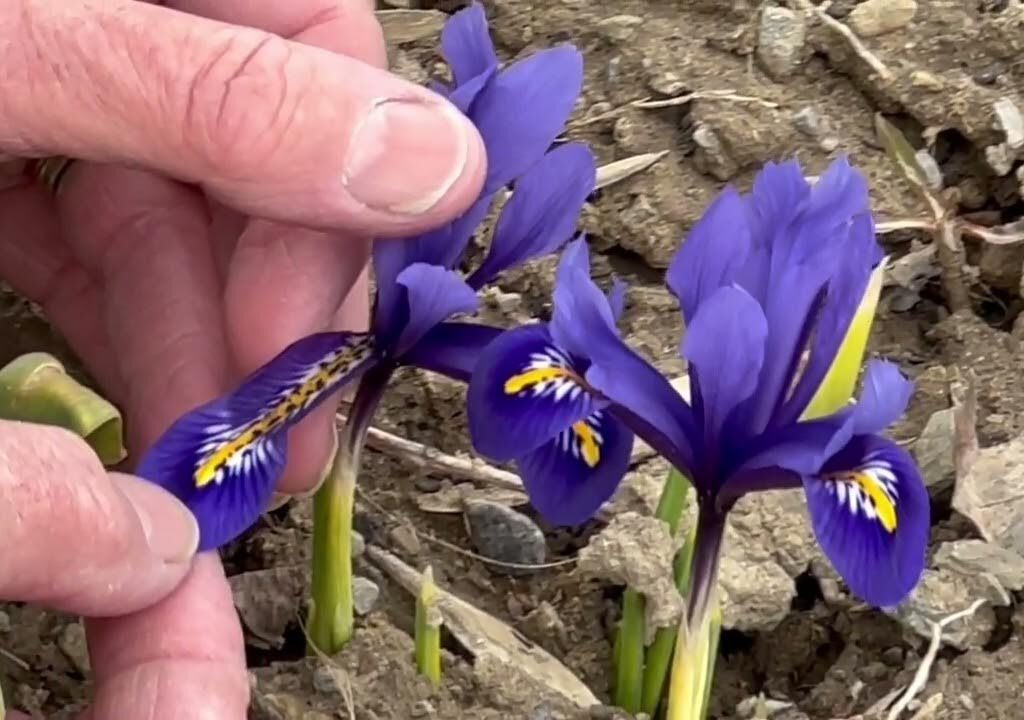
How to Choose the Best Flower Delivery Service in Crows Nest
Hybridizing Bearded Irises

iris descriptions

Iris Descriptions

Table of Contents

WHAT OUR ABBREVIATIONS MEAN

Rebloomers – RE – varieties that produce more than one crop of bloomstalks in a single growing season.

All Season Rebloomers – ASRE – varieties that can send up bloomstalks throughout the growing season.

Cycle Rebloomers – CYRE – varieties that complete two distinct cycles of growth, blossoming and increase in any  one growing season. The second new increase does not require vernalization (chilling period) to produce bloom stalks.  Has a predictable and dependable second period of flowering, usually in late summer and (or) fall.

Repeaters – RE r – produce additional bloomstalks on old growth immediately following the initial production of spring bloom.  It is not unusual for these varieties to extend the spring bloom season for four to eight weeks.

before the Re  XRe – means it has rebloomed for us in zone 6b in Cross Junction, VA (minimum temperature -5 degrees F).  Late season rebloomers have to completely open at least one flower before freeze damage.

z-6 etc.  zone – the coldest zone, defined by its lowest winter temperature, which the iris is reported to rebloom {much of California is zone 9 (20 to 30 degrees for a minimum temperature) but does have zones 5 through 8 and 10}, Arizona has zones 9 through 5(some higher altitudes can even be colder to zone 4 and 3), coastal parts of Virginia are zone 8; then, moving northwestward it becomes colder changing to zone 7; then, to zone 6b and 6a (minimum temperatures -10 degrees); and even colder in the highest Virginia mountains to zone 5.

This does not necessarily mean that if your zone is warmer that a particular iris variety will rebloom for you.

Rebloom could depend on your cultural conditions; if you water when dry or apply extra fertilizer, etc.  Sometimes a microclimate in a colder zone could still have rebloom. Also, hot summer night time temperatures can trigger dormancy that curtails rebloom, as does frigid winter temperatures. The best thing to do is just to give them a try.  Don’t give up after one or two years since some rebloomers need to be well established before they rebloom.  Also, some rebloomers are sporadic with only a tendency to rebloom, yet may rebloom now and then even in cold zones.  

z-6*10 etc.  that means that it reblooms in zone 6b in October, a *7 would be July, a *9 would be September, etc.

Rebloom Carriers – RE c – while it does not rebloom, they have produced reblooming seedlings when crossed with a rebloomer, which is valuable information for hybridizers.  They carry genes eliminating the need for vernalization.

purple iris

Types of bearded irises:

SA  Space Age irises, have something extra, beard appendages called horns, spoons or flounces.

His – historic iris cultivars are any iris introduced over 30 years ago.

MDB – miniature dwarf bearded, to 8″ (20cm) tall, the first beardeds to bloom in earliest spring.

SDB – standard dwarf bearded, 8″ to 16″ (21-40cm) tall, blooms in early spring.

IB – intermediate bearded, 16″ to 27.5″ (41-70cm) tall, blooms after SDB’s and before TB’s.

MTB – miniature tall bearded, 16-27 1/2″ (41-70cm) tall, flowers no more than 6″ (15cm) combined width plus height, blooms with the TB’s.

BB  border bearded 16-27.5″ (41-70cm) tall, blooms with the tall beardeds.

TB – tall bearded more than 27.5″ (71cm) tall, blooms in mid to late spring. 

AB – Arilbred, an iris that is part aril (at least 1/8) and part bearded iris.

Spe – species iris, as originally collected from or found in the wild

Median – All bearded iris classes (SDBs, IBs, BBs, and MTBs) shorter than 27.5,” except the MDBs.

Novelty – can have more than three falls, flat-shaped flowers, irregular color patterns, such as variegated flowers and foliage, and have too many or lack flower parts, such as standards, beards, style arms, etc.

BC – broken color, the petals have irregular splashes of color

Parts of an iris flower:

S – standards – The upturned three petals, (technically called petals) that surround the three style arms.

F – falls – The downturned (can be horizontally flared) three petals, (correctly called sepals) that possess beards.

Petals – A term sometimes used for convenience lumping standards and falls.

B – beards  Elongate groups of fuzzy hairs in the middle at the upper base of all three falls.

Spoons – Appendages extending from the tip of the beards that widen into spoon shaped petaloids.

Horns – A protrusion or extension of the beards, often ending in a point or may be hair covered.

Flounces – Wide, folded, often canoe or fan shapedappendages extending from the tips of the beards.

Style Arms – The three double crested structures inside the three standards, whose horizontal stigmatic lips are pollinated.  (The stamen arise at the base of the style arms extending vertically up their centers.)

Hafts – Areas on each side of the narrow base of the falls, on each side of the beards.

Shoulders – The areas on the arching upper middle part of the fallson each side just beyond the haft areas.

Pistil – The style arms with stigmatic lips connecting to the ovary. The female flower parts.

Claw – The narrow base of the standard and fallthe expanded leaf-like part is called the blade.

Ovary – The enlarged green, three-chambered structure enclosing the ovules where fertilization occurs.

Spathes  – The pair of modified green leaves that enclose the flower bud, usually turning tan after it blooms.

Stamen – The anther plus its attachment filament. The anthers contain the granular pollen. The male flower parts.

iris x germanica

Descriptive terms:

self – standards, style arms and falls are the same color, as a complete self they have the same color beards.

amoena – white standards with anthocyanin and/or carotenoid pigmented falls.

reverse amoena – anthocyanin pigmented standards and white or lighter colored falls, also called a darktop.

Emma Cook pattern – an amoena pattern with white, yellow, pink, peach, or orange standards and narrow, anthocyanin pigmented bordered falls.  The border can also be broader grading from darker at the periphery.

bicolor – standards are a different color than the falls.

bitone – standards and falls are a different shade of the same color, falls are darker.

neglecta – blue or purple bitones with standards a lighter shade of the color of the falls.

reverse bitone – a bitone with the standards a darker shade of the same coloras the lighterfalls.

blend – combination of two or more colors, can be smoothly or unevenly mixed.

variegata – yellow standards and maroon or brown falls.                  

plicata – stippled, dotted, or stitched margins of anthocyanin pigmentation on lighter ground color.

luminata – the reverse pattern of a plicata, with darker ground color and white edges, veins and around beards.

glaciata – these lack all anthocyanin pigments and are pure whites, yellows, pinks, or oranges, formerly called ices.

substance – thickness and resilient tensile strength of the flower parts.                                                           

texture – surface sheen or finish, such as velvety or satiny of the petals.

diamond dusted – tiny, conical raised areasacross the petal surface which shine like diamonds in the light.

silver lining – standards and falls have raised areas on the edges that reflects light in a shining line.

wash – obvious or definite overlay of one color on another.

infusion – faint or subtle overlay of one color on another.

sunburst – white or light streaks fanning out on the falls around, and sometimes beyond, the beards.

spot – darker area around and below the beard on lighter or different colored falls. 

signal – an area or patch  of contrasting color below the beards (usually on arils, and some beardless varieties).

zonal – a distinct white or light area around the beardsin the middle of the falls.

Awards: All AIS awards except ECs are based on voting by AIS judges on performance in the garden.

HC (Highly Commended) for a non-introduced seedling as judged in the garden and receiving five judges votes.

EC (Exhibition Certificate) awarded to the best seedling in an iris show or receiving five votes from judges present.

HM (Honorable Mention) award for an introduced variety, eligible the second year after its introduction.

AM (Award of Merit) required award for eligibility for all yearly awards (eligible the second year after receiving HM).

Yearly awards: given to the top voted cultivar.  In the catalog given with the year awardedsuch as DM 98.

WMM (William Mohr Medal) – award for arilbreds having at least 1/4 Aril ancestry.

CGW (Clarence G. White Medal) – award for pure Arils and Arilbreds with Aril traits and at least 1/2 Aril ancestry.

SM (Sass Medal) – award for Intermediate Bearded irises.

CDM (Cook-Douglas Medal) – award for Standard Dwarf Bearded irises.

CWM (Caparne-Welch Medal) – award for Miniature Dwarf Bearded irises.

KM (Knowlton Medal) – award for Border Bearded irises.

WWM (Williamson White Medal) – award for Miniature Tall Bearded irises.

WC (Walther Cup) – award for the most Honorable Mention votes.

WM (Wister Medal) – award for Tall Bearded irises.

DM (Dykes Medal) – the highest award an iris can receive, any class of iris is eligible, must have won an AM award.

Season of Bloom:

VE (Very Early)

(Early)

(Midseason)

L (Late)

VL (Very Late)

We update our catalog each year, adding an X in front of the Re if it rebloomed for us (in zone 6b). Newer introductions with a zone 7, 8, or 9 after the Re may rebloom in a colder zone (4, 5, or 6) when they become more widely grown.  Rebloomers have a sort of magic, and they can delight you with their extra bloom times. 

Other resources:
Miniature Dwarf Irises
How to Choose the Best Flower Delivery Service in Crows Nest
Finding the Best Florist in Cammeray for Fresh Flower Delivery